

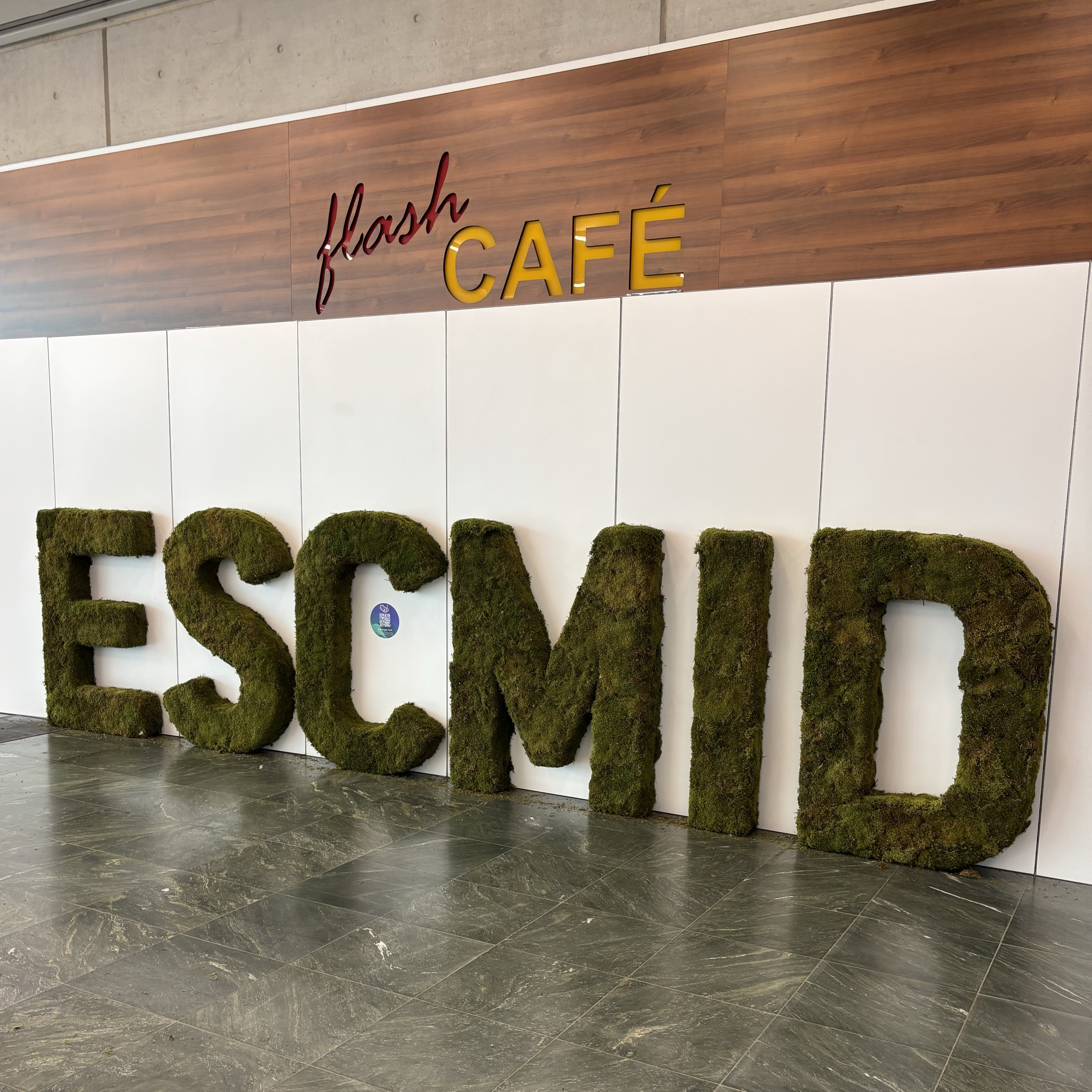
Attending the Congress of the European Society of Clinical Microbiology and Infectious Diseases (ESCMID) 2025 in Vienna was an incredible opportunity to immerse myself in the latest advancements in clinical microbiology. One key focus was the growing role of metagenomic sequencing (mNGS) in clinical diagnostics. In this blog, I share key learnings that may help laboratories navigate the challenges and opportunities of implementing mNGS in clinical workflows.
Clinical Applications of Metagenomic Sequencing
The first session I attended showed that the concept of metagenomics can be implemented in the clinical setting. Although a positive message, it requires a lot of knowledge and planning across the workflow from taking the samples to analysing the results. All in all, they showed that the implementation of sequencing such as metagenomics, can have a positive clinical impact which can prevent further use of unnecessary antibiotics and the administration of the correct treatment. The metagenomic method used by one speaker showed x4 more pathogens identified compared to standard blood cultures. The important take-home messages were that a positive clinical impact was seen with metagenomic sequencing, and the method was welcomed by the majority of clinicians. So, what is holding the method back?
Choosing the Right mNGS Platform: Illumina vs Oxford Nanopore
The next session I went to was about how to choose the correct platform. A poll on what platform is used by members of the audience showed that the top 2 were Illumina and Oxford Nanopore Technologies. These are two of the most well-known metagenomics platforms but work in different ways. There were also users of other sequencing platforms in the audience, and it shows that other companies are beginning to make their way in this space.
The Illumina sequencing technology works using clonal array formation and proprietary reversible terminator technology. Processed sequences are immobilised on a flow cell surface containing millions of tiny wells and amplified. These templates are then amplified using fluorescently labelled nucleotides which terminate the reaction and are used to identify the sequence through laser excitation. This is a method of short-read sequencing. Oxford Nanopore Technologies (ONT) however, is an example of long read sequencing. ONT sequencing occurs using tiny holes called nanopores embedded in an electro-resistant membrane. When a sequencing template enters the nanopore, it disrupts the electrical current which differs for each nucleotide. The two methods; long read and short read, allow for annotating both the taxonomy and function of pathogens sequenced, but come with their own pros and cons as shown in Table 1.
Long read sequencing Short read sequencing Input DNA Higher input needed (1ng and up) Good for low-quality/degraded DNA as well as low DNA input (as low as 10pg) Functional output Lower data output Large data output Good genome assembly Can be used for counting applications (proteomics) Finer taxonomy resolution Unknown sequences have a lower quality for annotation. Risk of artifact formation Current output ranges from 1x50 to 2x300 Variable sequence quality Good with less diverse samples Read lengths from 500-500,000 bases Quick TAT Can handle uracil bases Cost Higher cost Low cost Future Improving costs and DNA input Improving read length
Table 1: Comparison of long-read and short-read sequencing
A lot of current microbiology workflows consist of blood cultures which although is a cheap method, has a long turnaround time and not all pathogens are cultivable in blood cultures and as a result, would be missed. Molecular methods such as PCR are however improving this space but require specific primers to identify the pathogen in question which is not always known. A middle-ground method between PCR and metagenomics is targeted 16S or internal transcribed spacer (ITS) sequencing. This is where the broad range PCR product is used for mNGS. I have not touched on this method here, but it allows the sequencing of microbial DNA which has the conserved gene chosen. Molzym have recently released an application note using this method with ONT and this provides a more specific sequencing output, please click here to read (Abendroth, 2025). In this blog, I have focused on metagenomic sequencing of untreated microbial content. Sequencing using mNGS can improve both the turnaround time and the accuracy of what you are looking to treat in your patient compared to other methods.
The take-home message from this session was that the best way to decide on which platform to choose is based on your project goal, the available instrumentation you have and your budget. Metagenomic sequencers are improving constantly, and this choice may become easier due to the increase in performance… or harder as more companies move into the space!
Avoiding Common Pitfalls in mNGS Implementation
The introduction of a new method, especially in a clinical session can be very daunting. This made the next session, where speakers discuss the mistakes to avoid incredibly insightful. Here I have highlighted some of the main areas where mistakes are possible and how to avoid them by asking various questions and thinking about different steps within the method.
- The sample type – What is the sample material? How it is stored? When it is analysed? What is the DNA content within these samples? The answers to these questions can determine the success of a sequencing method by determining your wet laboratory steps before sequencing. A useful piece of advice from the experts was to optimise a flow chart for each sample type and clinical question (are you looking at bacteria or viruses) that you want to process and achieve as one method may not be appropriate for every sample type and clinical question.
- Host DNA depletion – This step was highlighted multiple times and shown to be an important factor when it comes to mNGS. Samples can contain around 99% human DNA which can mask the microbial DNA you are looking for. Host DNA depletion can also save you costs as it will prevent you from sequencing DNA which you will want to remove at the bioinformatics stage and also allow you to see your microbial population without increasing your sequencing depth. Your host DNA depletion method and DNA extraction method need to be of a high quality to avoid biases downstream as much as possible. Depleting your host DNA presence aids in the identification of antimicrobial resistance genes and pathogens which would have otherwise been lost in the mass of human DNA sequences (Rubiola et al., 2020).
An example of host DNA depletion is the introduction of the MolYsis technology from Molzym. It was nice to hear the MolYsis kits being mentioned multiple times both shown in comparison with multiple other methods and mentioned while listening to the talks. The table below shows the kits which can be used for mNGS workflows (Table 2).
| Host DNA depletion kits from Molzym | Sample type | Host DNA depletion | Microbial DNA extraction | Format |
|---|---|---|---|---|
| Basic5 (RUO) | Liquid | ✔️ | Manual | |
| Complete5 (RUO) | Liquid | ✔️ | ✔️ | Manual |
| Ultra-deep microbiome prep kit (RUO) | Tissue & Liquid | ✔️ | ✔️ | Manual |
| SelectNA plus instrument plus the SNplus kit (IVDR) | Tissue & Liquid | ✔️ | ✔️ | Automated |
Table 2: The different MolYsis kits from Molzym which can be used upstream in your mNGS workflow.
3. The Critical Importance of Controls at Every Stage – Clinical samples are highly variable so the introduction of further variables can make your results impossible to interpret. Variables can be added at every stage of processing from sample to result and so the relevant controls at each stage are important. Multiple controls will also aid in controlling your controls to make sure that they are working correctly. Below is a table including some examples (Table 3).
| Stage | Control | Why? |
|---|---|---|
| Samples | Negative control | Have any contaminants been added during sample taking? Is there anything in your sample medium/tube/swab? |
| Positive control such as external quality assurance samples | Is your method giving you the expected results? Can it be standardised across other institutes? | |
| DNA extraction | Internal extraction control | Has the extraction been successful? Is this method reproducible? |
| Positive control | Has the extraction method extracted the expected DNA? Does the extraction method deplete any particular microbial groups? Is this method reproducible? | |
| Negative control | Is there any contamination at this step? | |
| Library preparation | Positive control | Is the kit working as it should? |
| Negative control | Are there any contaminants present? Does your kit have a kitome? A kitome is the background level of contamination which can be seen in some reagents. | |
| Sequencing | Positive control | Is the method working as it should? |
| Negative control | Are there any contaminants present? Does your kit have a kitome? | |
| Bioinformatics | In silico negative mock | Are there any background results coming up? |
| In silico positive known mock | Is the pipeline working as it should? |
Table 3: Examples of controls which can be added at every step of a mNGS workflow
4. Bioinformatic pipelines – What is in your database? How does your chosen software deal with ambiguous hits (conserved regions)? How does your chosen software deal with missing data in the databases? What taxonomic resolution does your chosen software enable? Are you sure the identified gene is responsible for the phenotype? Do you have a threshold for your results? Do you have a bioinformatician to work through the large data output? Can you interpret the results in a clinical setting? Bioinformatic platforms are getting better every day but there are pitfalls where the above questions are important to address. The experts advised that it is important to validate your bioinformatic pipelines and databases for clinical practice and also to map unknown reads as they could be unknown pathogens.
Roadblocks and the Future of mNGS in Clinical Laboratories
A key aspect of the Q&A panel during each session was the current roadblocks and how to address them. Current obstacles that microbiologists are facing when it comes to the routine implementation of NGS within their laboratories are; the total costs of the machines and reagents necessary, the manpower for the wet lab stages, the bioinformatics expertise needed, and the current value compared to the current methods. It was insightful hearing both the audiences’ reservations but also how the speakers addressed them.
A key barrier is the current lack of IVDR certification for mNGS and bioinformatic workflows. Current sequencing methodologies are assessed as in-house tests which further increases the cost to implement as a clinical test. How this is handled in the future will also direct how the introduction of metagenomics in the clinical laboratory moves forward.
There is no standardisation of these methods which can increase variability across institutes especially when it comes to data interpretation. Speakers within the sessions spoke about how networking and sharing information with help address this. Some countries are working on a joint solution for bioinformatics infrastructure through collaboration which will, in turn, help these methods develop and thrive. The future goal for mNGS is to link pathogens to the human response. Use this method for real-time tracing of outbreaks and improve our pandemic preparedness. Machine learning and AI may also further improve mNGS methods.
For some clinical questions, both a targeted sequencing method and a metagenomic sequencing method may be necessary but as the field progresses, this may change. More work is being done to assess the clinical impact of mNGS and it has been great to see it in real-time from speakers at ESCMID. Even with these advancements, the speakers at the talks said that the information shared was already out of date due to how fast the field is moving! No method is perfect, even at the gold standard, as there will always be questions but the more information you have around each question, the closer you are to an answer. The potential clinical impact that mNGS can have and is already having in the microbiology world is something I am eager to see progress further!

I enjoyed hearing about new advancements in the field in a way where people could ask the experts their questions and helped me further understand what is needed in a method so new and complicated when applied to a clinical setting. Another aspect I enjoyed about the conference was the location and the scavenger hunt! Vienna was a beautiful city with so much going on! On the scavenger hunt, we found 20 out of the total 30 QR codes which were dotted around the venue which led us to a question. I knew some of the answers thanks to working on a research floor with other virologists! If you attended the conference, how many did you find on the scavenger hunt?

If you have implemented mNGS within your laboratory or are interested in discussing how solutions like Molzym’s technologies can support your workflows, I would be delighted to connect.
Acknowledgements and References
I would like to thank the speakers of these talks who shared this information with me in these sessions:
Hans Linde Nielsen, Jose Alexander, Robbie Hammond, Torsten Schroeder, Ekkehard Siegel, Luke Blagdon Snell, Bowen Ran, Chunyan Peng, M.Hong Nguyen & Marion Dutkiewicz – Translating metagenomics into clinical practice.
Etienne Ruppe & Stefan Green – cut a long story short: choosing NGS platforms.
Paula Mölling, Mads Albertsen, Basil Britto Xavier & Claire Bertelli Implementing metagenomics in my lab and mistakes to avoid.
Plus, the chairs for each session and those that asked questions.
Abendroth, B. (2025) Targeted 16S amplicon ONT MinION workflow. Technical Note from Molzym. No. 1/2025V01:1-8
Rubiola, S., Chiesa, F., Dalmasso, A., Di Ciccio, P., Civera, T. (2020) Detection of antimicrobial resistance genes in the milk production environment: impact of host DNA and sequencing depth. Frontiers in Microbiology. 11(1983) doi:10.3389/fmicb.2020.01983
Enquire about this article
"*" indicates required fields
