

Bovine tuberculosis (bTB), caused primarily by Mycobacterium bovis (M. bovis), presents ongoing challenges for veterinary diagnostic laboratories, animal-health researchers and disease-surveillance teams. Molecular methods can detect M. bovis DNA more rapidly than culture in some workflows, but results depend on the whole process, from sample collection and transport to preparation, extraction and analysis.
PrimeStore® Molecular Transport Medium (MTM) is designed to support pathogen inactivation and nucleic-acid stabilisation for molecular analysis. Research has explored its use in handling samples investigated for M. bovis, including tissue swabs, oronasal swabs and bovine milk. PrimeStore® MTM supports sample handling, while detection is carried out by the downstream assay as part of a workflow evaluated for its intended purpose. This article looks at what published research can tell us about using PrimeStore MTM in sample-handling workflows for the molecular investigation of M. bovis, including the questions laboratories should consider when evaluating an approach. Why sample handling matters in molecular bTB workflows.
For veterinary diagnostic and research laboratories, sample handling is an important part of the molecular workflow. Sample type, collection method, transport conditions, storage and DNA extraction can all affect whether target nucleic acids remain suitable for analysis. Specimens may also present biosafety considerations when they could contain infectious material.
PrimeStore® MTM is intended to help inactivate pathogens and stabilise nucleic acids under specified conditions. Studies have investigated its use to preserve samples before molecular analysis, including storage and transport at ambient temperature under the conditions tested. Performance can vary by sample type, pathogen and downstream assay, so each workflow should be evaluated for its intended use.
What does the research show?
The studies below illustrate how PrimeStore® MTM has been investigated as part of sample handling for molecular research into M. bovis. Two of the studies used the Cepheid Xpert MTB/RIF Ultra assay, an automated, cartridge-based molecular test designed to detect Mycobacterium tuberculosis complex (MTBC) DNA. Together, the studies show how sample type, animal species, assay choice and study conditions can influence the results.
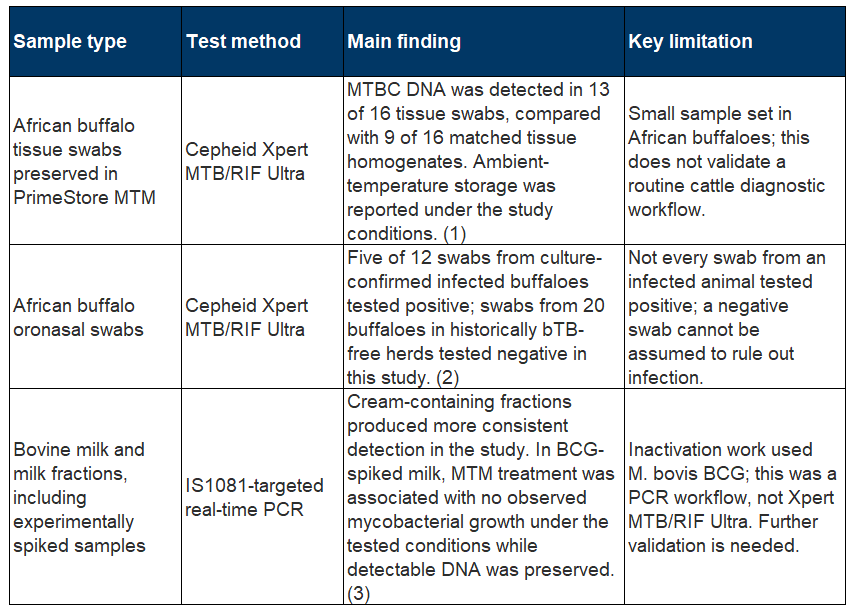
Table 1. Summary of selected research. Results apply to the particular samples, methods and conditions described in each study.
Tissue and oronasal swabs: research using Xpert MTB/RIF Ultra
Clarke and colleagues investigated PrimeStore MTM-preserved tissue swabs collected from African buffaloes with confirmed M. bovis infection. Xpert MTB/RIF Ultra detected MTBC DNA in 13 of 16 tissue swabs, compared with 9 of 16 matched tissue homogenates. The researchers also reported that MTM-preserved swabs could be stored at ambient temperature under the study conditions. These results suggest that swab-based sampling and MTM preservation may warrant further investigation for molecular research workflows. (1)
A subsequent study examined oronasal swabs as a less invasive sampling approach. Xpert MTB/RIF Ultra detected MTBC DNA in five of 12 swabs from culture-confirmed infected buffaloes; swabs from 20 buffaloes in historically bTB-free herds tested negative in that study. The findings demonstrate why sample type and collection strategy matter: not every swab from an infected animal produced a positive result. (2)
These studies provide useful proof-of-concept evidence from African buffaloes. Further evaluation would be needed before applying the approach to cattle or routine veterinary diagnostics. Xpert MTB/RIF Ultra is intended for specified human clinical applications, so any veterinary workflow would need to be assessed for its intended sample type and purpose. A second example: bovine milk and PCR
Milk differs from swabs and tissue: its fat, protein and other components can affect processing and DNA recovery. A 2023 study evaluated an IS1081-targeted real-time PCR assay for M. bovis DNA in bovine milk. Cream-containing fractions produced more consistent detection than whole milk or the pellet alone, highlighting the importance of matrix-specific sample preparation. (3)
The researchers also assessed PrimeStore® MTM using experimentally spiked milk containing M. bovis BCG. Under the study conditions, no mycobacterial growth was observed after treatment, while PCR-detectable DNA was preserved. This study used BCG-spiked milk and real-time PCR rather than Xpert MTB/RIF Ultra, so further work would be needed to assess other strains, sample conditions and downstream assays. (3)
What laboratories should consider before adopting a workflow
The research reinforces the need to evaluate the complete sample-to-result process. Laboratories and research teams considering an MTM-based approach should assess:
- The intended sample type and collection method.
- Compatibility between the sample matrix, PrimeStore® MTM and the planned molecular assay.
- The sample-to-medium ratio, transport arrangements and storage conditions.
- DNA extraction and sample-preparation requirements.
- Biosafety procedures and the specific conditions under which pathogen inactivation has been demonstrated.
- Validation and any relevant regulatory requirements for the intended research, surveillance or diagnostic use.
Molecular testing and culture answer different questions. Molecular methods detect target DNA, while culture recovers viable organisms and can support further characterisation. The appropriate method depends on the purpose of the investigation. Results should be interpreted alongside the sampling method and wider laboratory and epidemiological evidence.
Frequently asked questions
Is PrimeStore® MTM a bovine TB diagnostic test?
No. PrimeStore® MTM is a sample-handling medium designed to support pathogen inactivation and nucleic-acid stabilisation. It does not detect or diagnose M. bovis on its own. Detection depends on the downstream molecular assay and a workflow evaluated for its intended use.
Which sample types have been studied?
The research discussed here includes tissue and oronasal swabs from African buffaloes investigated using Xpert MTB/RIF Ultra, and bovine milk or milk fractions evaluated using an IS1081-targeted real-time PCR assay. Evidence from one sample matrix should not be assumed to apply to another.
Does molecular testing replace culture?
Not necessarily. Molecular methods can detect target DNA more rapidly in some workflows, while culture can recover viable organisms and support further characterisation. The appropriate approach depends on the purpose of the investigation and applicable laboratory and regulatory requirements.
Can PrimeStore® MTM-preserved animal samples be used with Xpert MTB/RIF Ultra?
Research has investigated MTM-preserved tissue and oronasal swabs from African buffaloes alongside Xpert MTB/RIF Ultra. Published studies have combined PrimeStore MTM-preserved tissue and oronasal swabs from African buffaloes with Xpert MTB/RIF Ultra. Laboratories would need to assess the approach for their own sample type and intended use.
Discuss your sample-handling requirements with VH Bio
If your laboratory or research team is exploring molecular testing for M. bovis, VH Bio can discuss your sample-handling requirements. Tell us about your sample type, transport needs, intended molecular test and validation requirements, and our team can help you explore whether PrimeStore® MTM is appropriate to evaluate within your workflow.
Contact VH Bio using the form below to start a conversation about sample collection, transport and preservation for molecular testing.
References
- Clarke, C., Smith, K., Goldswain, S. J., Helm, C., Cooper, D. V., Kerr, T. J., Kleynhans, L., van Helden, P. D., Warren, R. M., Miller, M. A. & Goosen, W. J. (2021). Novel molecular transport medium used in combination with Xpert MTB/RIF Ultra provides rapid detection of Mycobacterium bovis in African buffaloes. Scientific Reports, 11, 7061. https://doi.org/10.1038/s41598-021-86682-5
- Clarke, C., Cooper, D. V., Miller, M. A. & Goosen, W. J. (2022). Detection of Mycobacterium tuberculosis complex DNA in oronasal swabs from infected African buffaloes (Syncerus caffer). Scientific Reports, 12, 1834. https://doi.org/10.1038/s41598-022-05982-6
- 3. Zeineldin, M. M., Lehman, K., Camp, P., Farrell, D. & Thacker, T. C. (2023). Diagnostic evaluation of the IS1081-targeted real-time PCR for detection of Mycobacterium bovis DNA in bovine milk samples. Pathogens, 12(8), 972. https://doi.org/10.3390/pathogens12080972
Enquire about this article
"*" indicates required fields
