

BSHI came a little earlier than usual this year with it being held jointly with the EFI conference. Although it was kept local with it being held in an unusually sunny, spring-time blossom-filled Edinburgh!
The theme this year was ‘From Genes to Grafts – where innovation meets medicine,’ a theme which was evident throughout the many plenary and teaching sessions.
The VH Bio Transplant Team (Ben Adams, Mohammad Ali Rafique and Victoria Wood) and Managing Director (Alison Wortley) started off the conference week by attending the Thermo Fisher Scientific pre-EFI Workshop where a range of strategies to explore difficult HLA antibody profiles, a post-transplant urinary chemokine assay, hybrid-capture technology for NGS HLA typing (One Lambda™ HybriType™) and H&I automation solutions (One Lambda™ HLA PRO) were discussed.
From an HLA-antibody perspective, Dr Richard Battle, Consultant Clinical Scientist with the Scottish National Blood Transfusion service (SNBTS) presented case work demonstrating the utility of adsorption/elution assays (One Lambda™ MagSort™) in characterising HLA antibody reactivity. This included identification of reactive epitope targets and distinguishing between true monoclonal and polyclonal reactivity, noting that often perceived ‘single donor-specific antibody’ cases are the result of polyclonal, sometimes inter-locus, reactivity which can be of relevance to antibody de-listing strategies and policies. We also had an introduction to the upcoming HLA Fusion software Amino Acid 3D (AA3D) module, a continuation of the current Amino Acid (AA) module which enables scanning of aligned HLA protein sequences to identify shared polymorphic motifs on HLA-antibody positive alleles. The advantage over HLA Matchmaker being that it is not constrained by a pre-defined eplet reference list. The AA3D module takes this one step further by considering the 3D clustering of amino acids, including HLA-DQ and -DP alpha/beta chain pairing and predicts targets of reactivity by comparing clusters in positive vs. negative antibody specificity profiles. Certainly, moving towards a more biologically representative way of looking at targets of antibody reactivity. On this vein, the LABScreen™ Single Antigen ExPlex assay is soon to be expanded with the option to include an additional 27 DQ antigens with alternative alpha/beta combinations. The aim of this being to support analysis of complex HLA-Class II antibody reactivity, which by its heterodimeric nature can be harder to interpret. This was later in the conference picked up again at the Thermo Fisher Scientific lunchtime symposium by Professor Jean-Luc Taupin of Saint-Louis Hospital, Paris. He presented their local experience of utilising the extended panel to further elucidate complex DQ antibody profiles.
EFI/BSHI 2026 was officially opened by EFI President Dr Marco Andreani, the local organising committee Chairs Dr David Turner (SNBTS) and Dr Ann-Margaret Little (recently retired head of Glasgow H&I laboratory) and BSHI Chair Dr Olivia Shaw. After the COVID pandemic prevented EFI from being held physically in Glasgow in 2021, it was a long-awaited welcome to Scotland for our continental European colleagues! A series of awards and presentations followed including the BSHI Honorary Membership award which was presented to Professor Steven Marsh for his (very) extensive contribution to the field of H&I; including his roles as the Chairman of the WHO Nomenclature Committee for Factors of the HLA System and Editor-in-Chief of the HLA journal. With his Editor-in-Chief hat on, Professor Marsh presented Dr Martin Maiers with the HLA award. This is awarded to the authors of the manuscript published in the HLA journal in the previous year, that through citations and downloads has been deemed to have the most scientific impact in the field. The manuscript in question detailed the Registry of Unmet Need (RUN) project whose aim is to highlight and seek to address the disparities in access to stem-cell transplantation for patients with rare HLA types, particularly populations under-represented in global donor registries.
Prof Steven Marsh presenting the HLA Award to Dr Martin Meiers.
The Julia Bodmer award which celebrates young scientists in the H&I field was awarded to Dr Antonio Schäfer, University of Oslo for her work in NK cell biology and its impact on Haematopoietic Stem Cell Transplantation. And this year’s Ceppellini lecture was delivered by Professor Catherine J. Wu, recognising her contribution to our understanding of cancer immunology and her being instrumental in advancing personalised cancer vaccine development and immunotherapy. Very appropriate for this year’s theme!
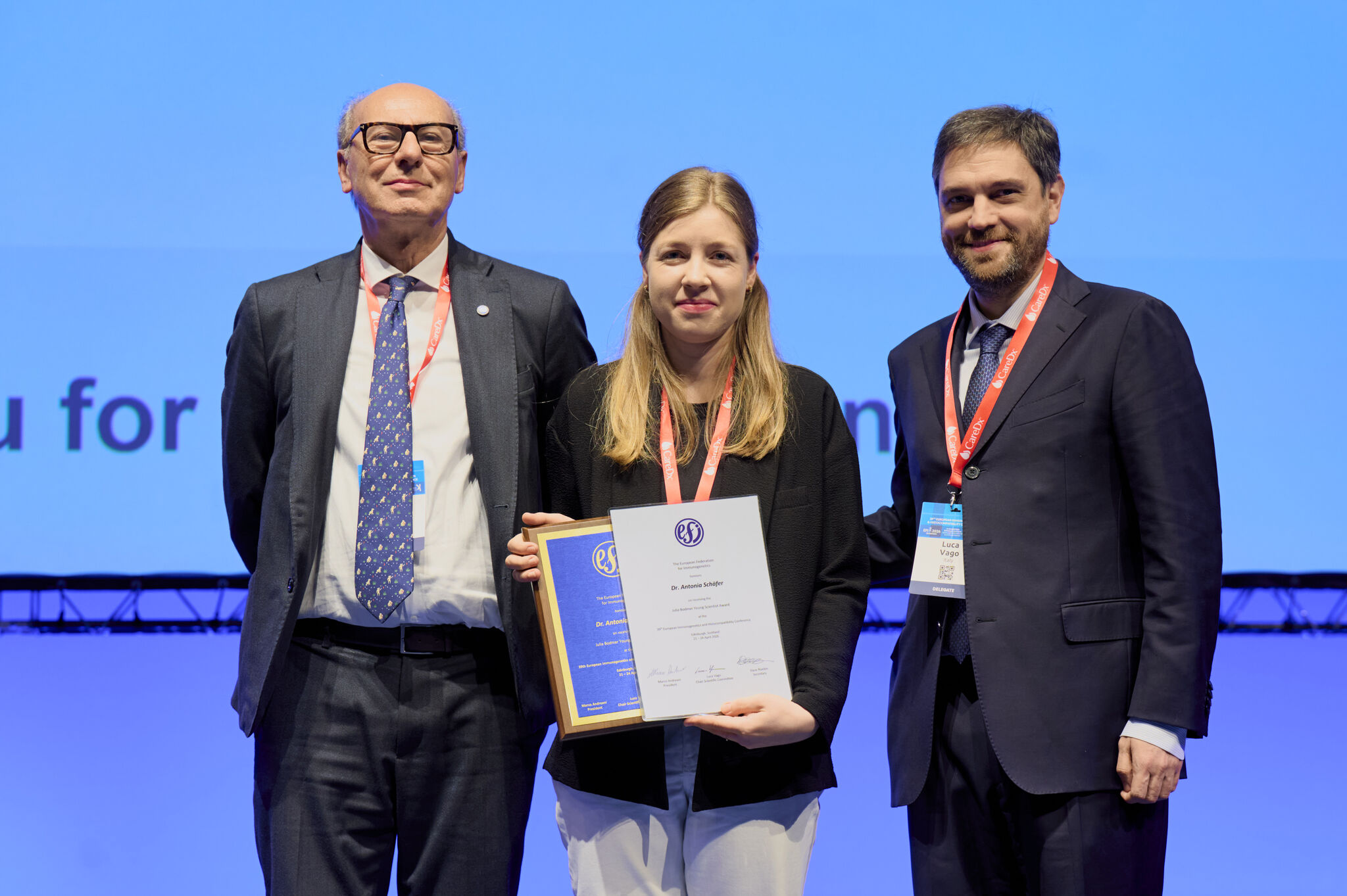
Dr Antonia Schäfer receiving the Julia Bodmer Award
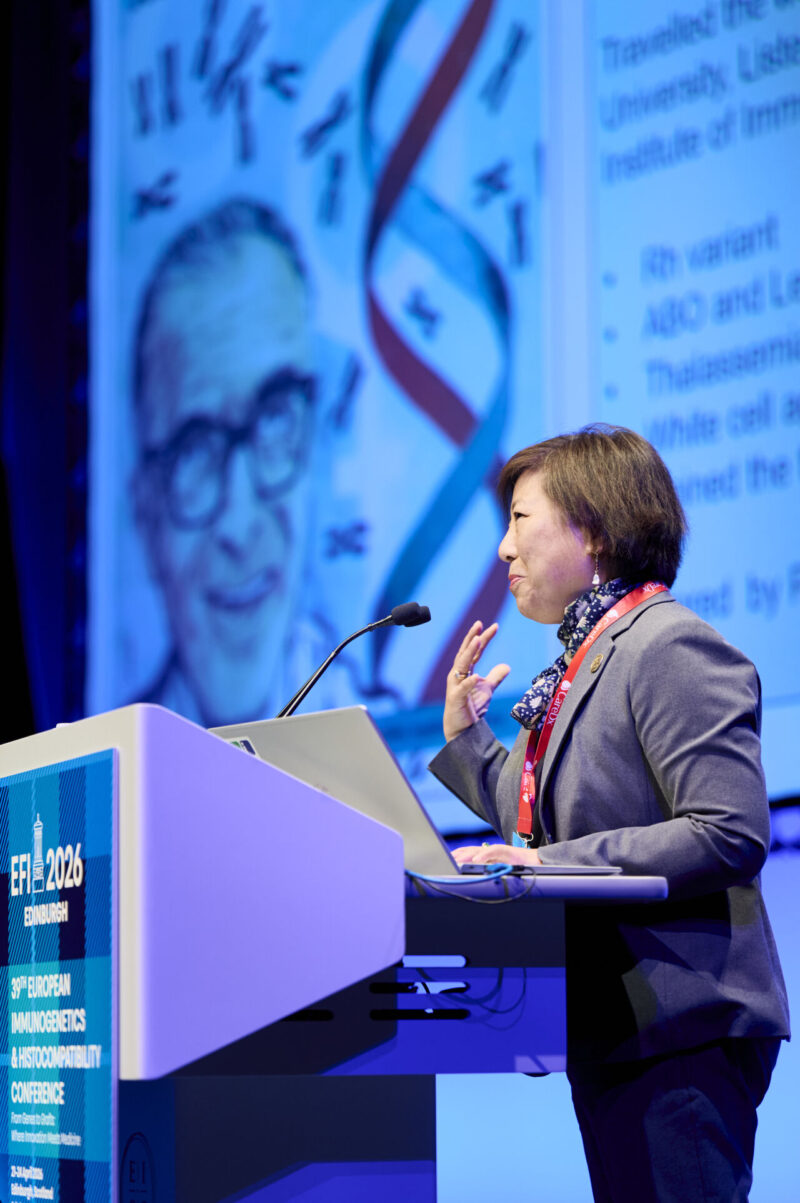
Professor Catherine J. Wu delivering the Ceppellini lecture
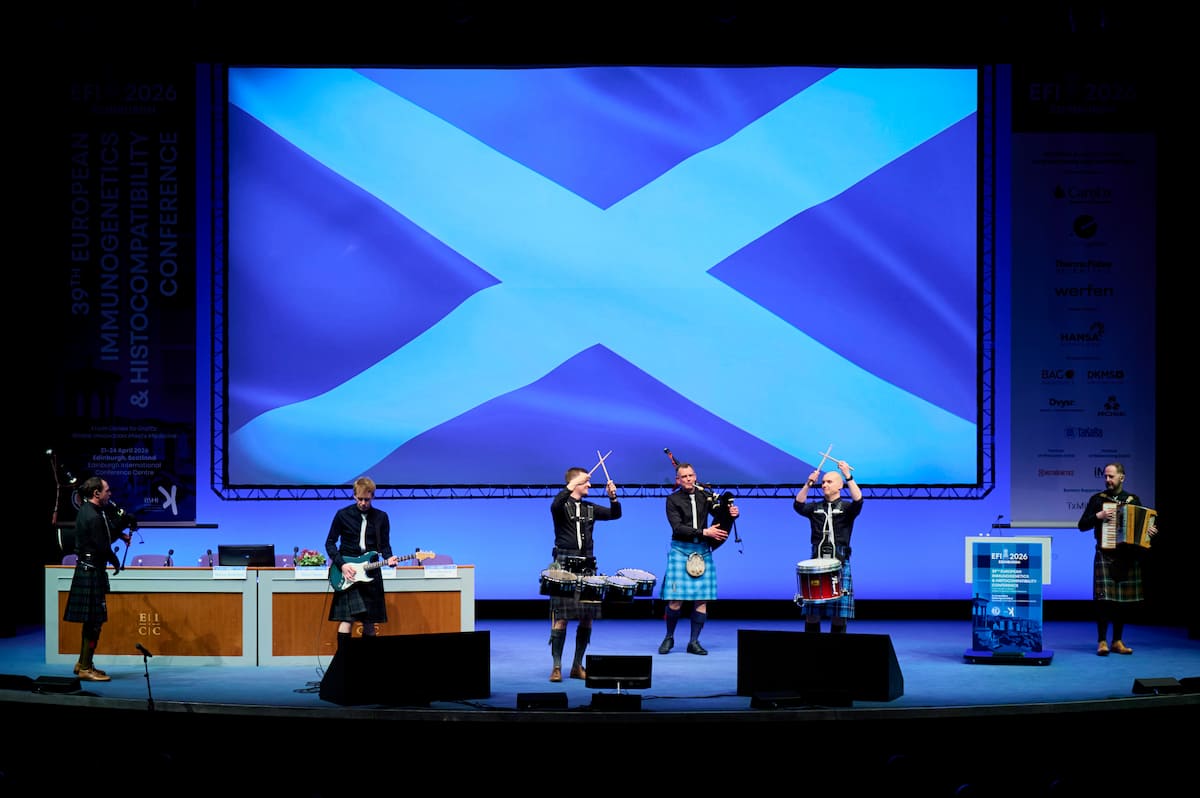
After the series of well-deserved awards and excellent presentations, we were all treated to some slightly unconventional Scottish bagpipe and drum renditions of songs from the likes of Avicii and Daft Punk!
Pipe Down band
The Welcome Reception, where delegates were able to mingle and catch-up over wine and some good nibbles was held in the Exhibition Hall. As well as hosting the exhibitor stands, the Exhibition Hall remained a social hub throughout the conference and all of us at VH Bio enjoyed the regular drop-ins from the H&I community. Our ‘Protocol for Calm’ colouring/puzzle books and pencils went down a storm, too! These relate to our partnership with the If U Care Share foundation, an independent charity based in the Northeast of England which works to prevent suicide and support those affected by it.
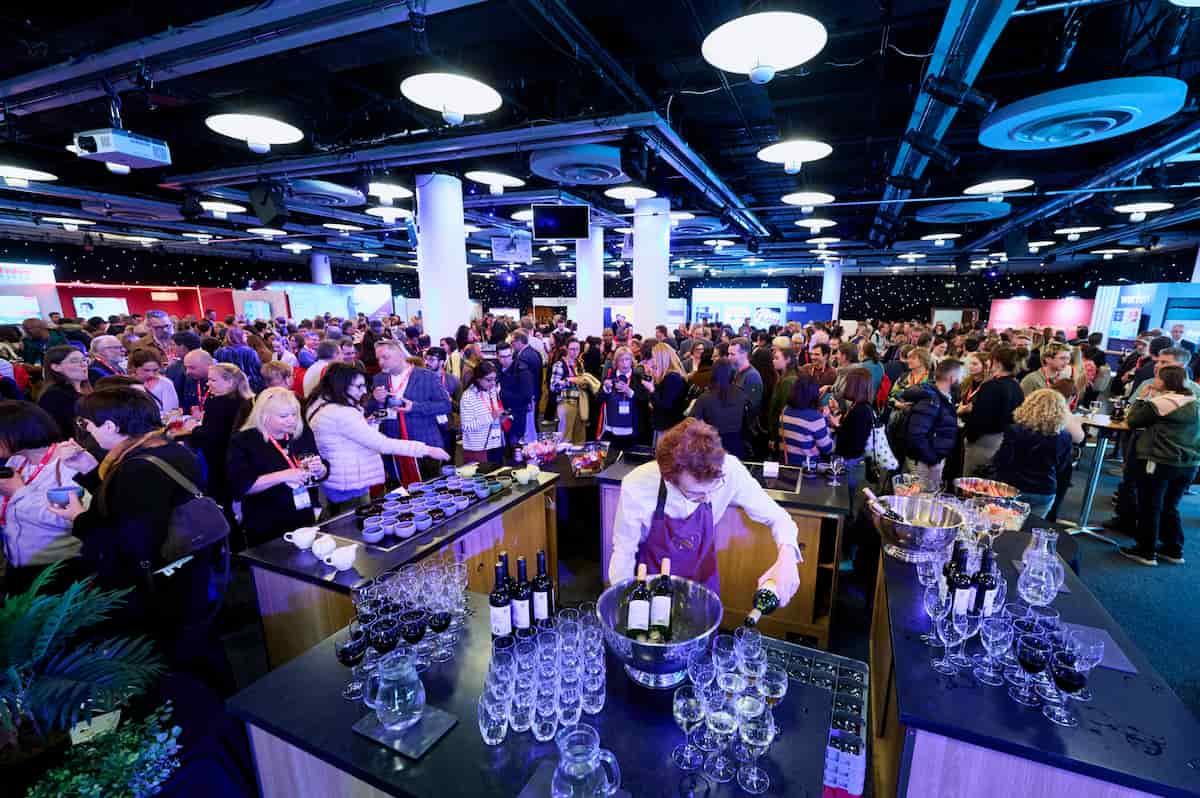
Welcome Reception
There was a packed programme over the next few days including presentations of both basic and applied science and topical teaching sessions. The non-HLA alloantibodies in solid-organ transplant teaching session gave a great overview of a range of non-HLA alloantibodies, most notably Human Neutrophil Antigen (HNA) and MHC Class I Chain-related A (MICA) antibodies. It was a great reminder of the need to look beyond HLA when considering transplant decisions and patient/graft outcomes and showcased multi-centre collaborative work to inform changes in policy for patient benefit – a strength of the H&I community.
The networking event held at the National Museum of Scotland was a great evening for all. Awards were presented by BSHI Chair, Dr Olivia Shaw before Scottish Sword Dancing demonstrations and an all-important Ceilidh!
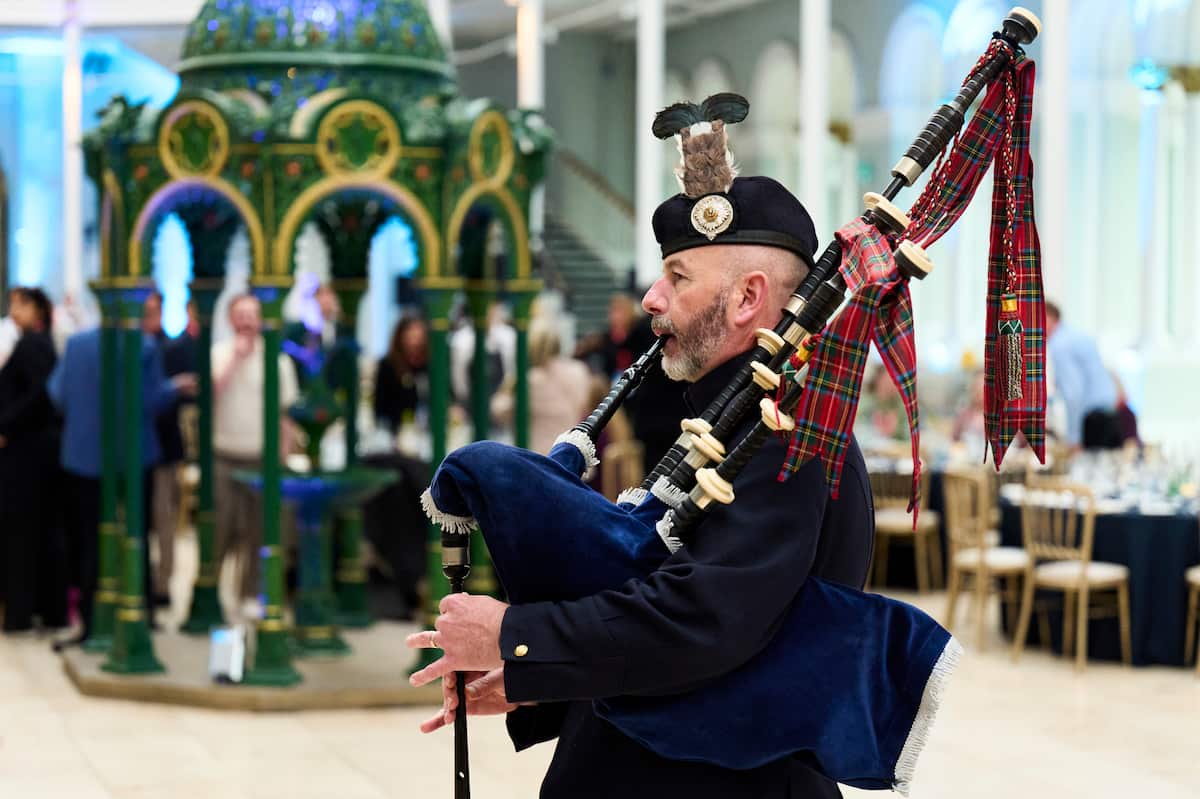
Networking Event
The VH Bio team had a fabulous BSHI/EFI 2026; a huge thanks to the local organising committee and to all the incredible scientists presenting their work to the community!
Enquire about this article
"*" indicates required fields
